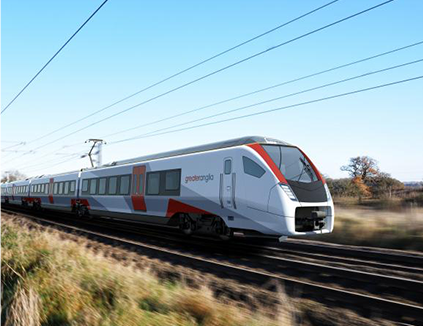
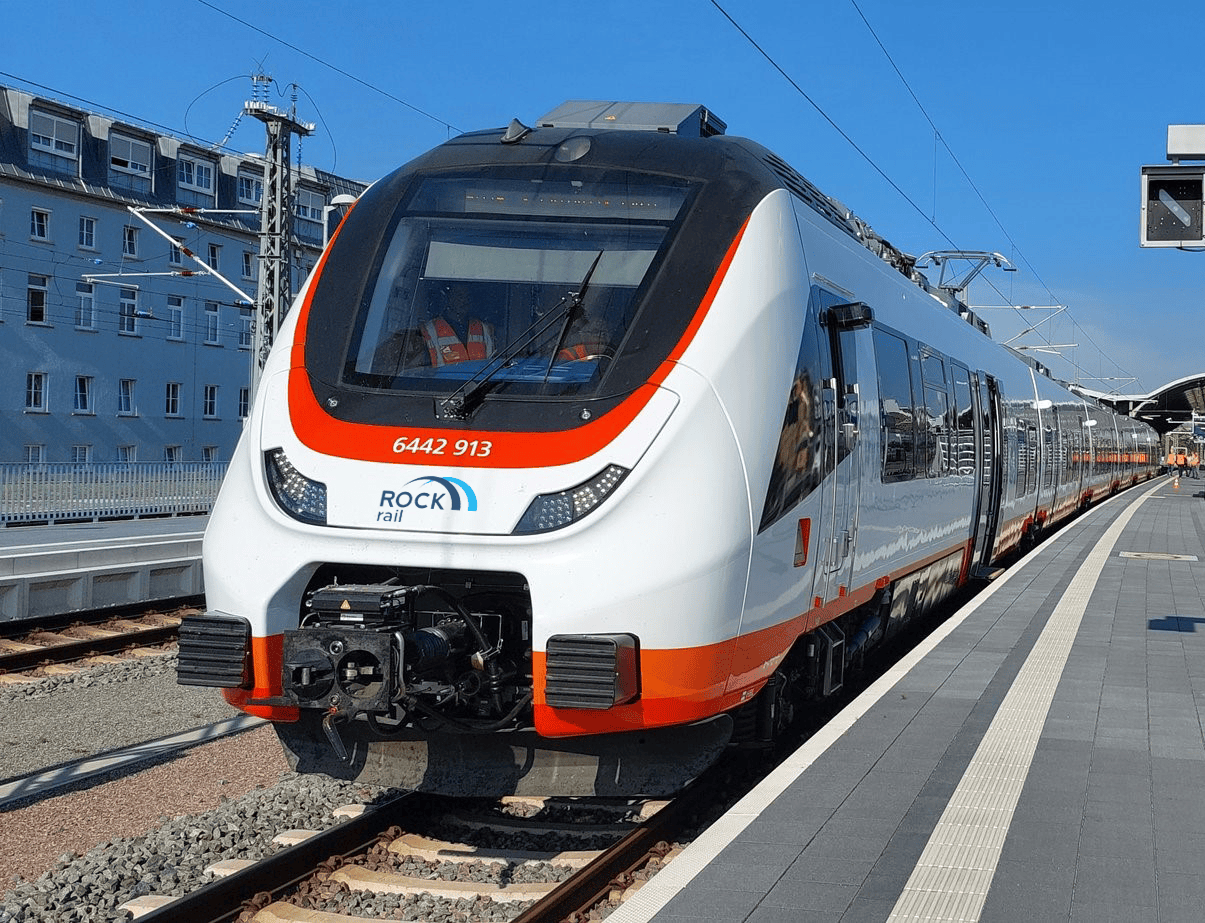
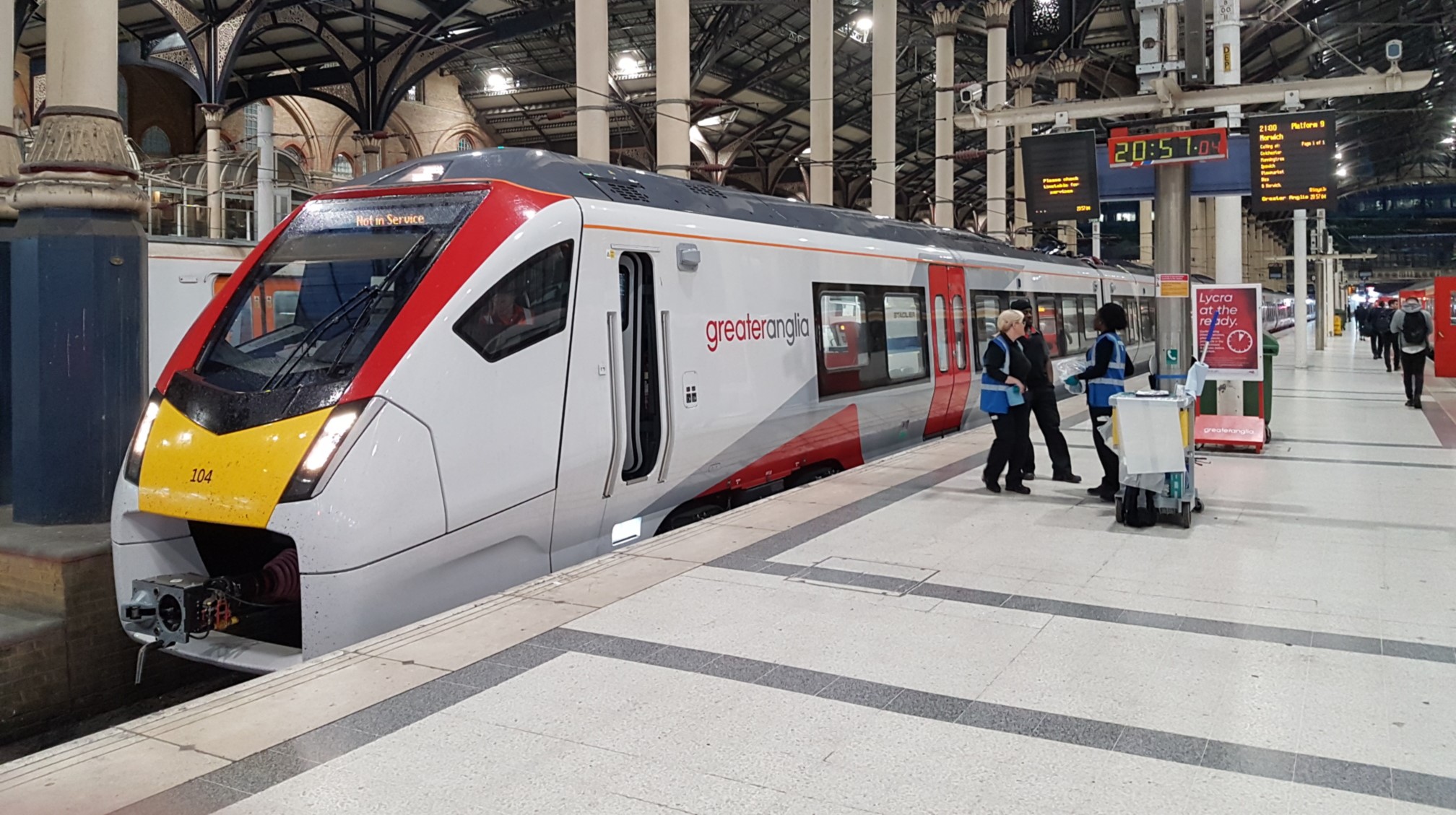
First 12-carriage electric train for Greater Anglia arrives at Liverpool Street station, London

The class 745/1 EMU train is one of the 58 new trains that Swiss rail-manufacturer, Stadler, is building for the Greater Anglia network. The fleet consisting of 12-car EMUs and 3 and 4-car BMUs are financed by Rock Rail East Anglia, a joint venture between Rock Rail, Aberdeen Standard Investments and GLIL Infrastructure and will be leased to Greater Anglia.

The arrival of the first of ten class 745/1 trains into London represents a highly symbolic landmark for the project. The new fleet, which is in the later stages of the test phase, will start going into passenger service this year.

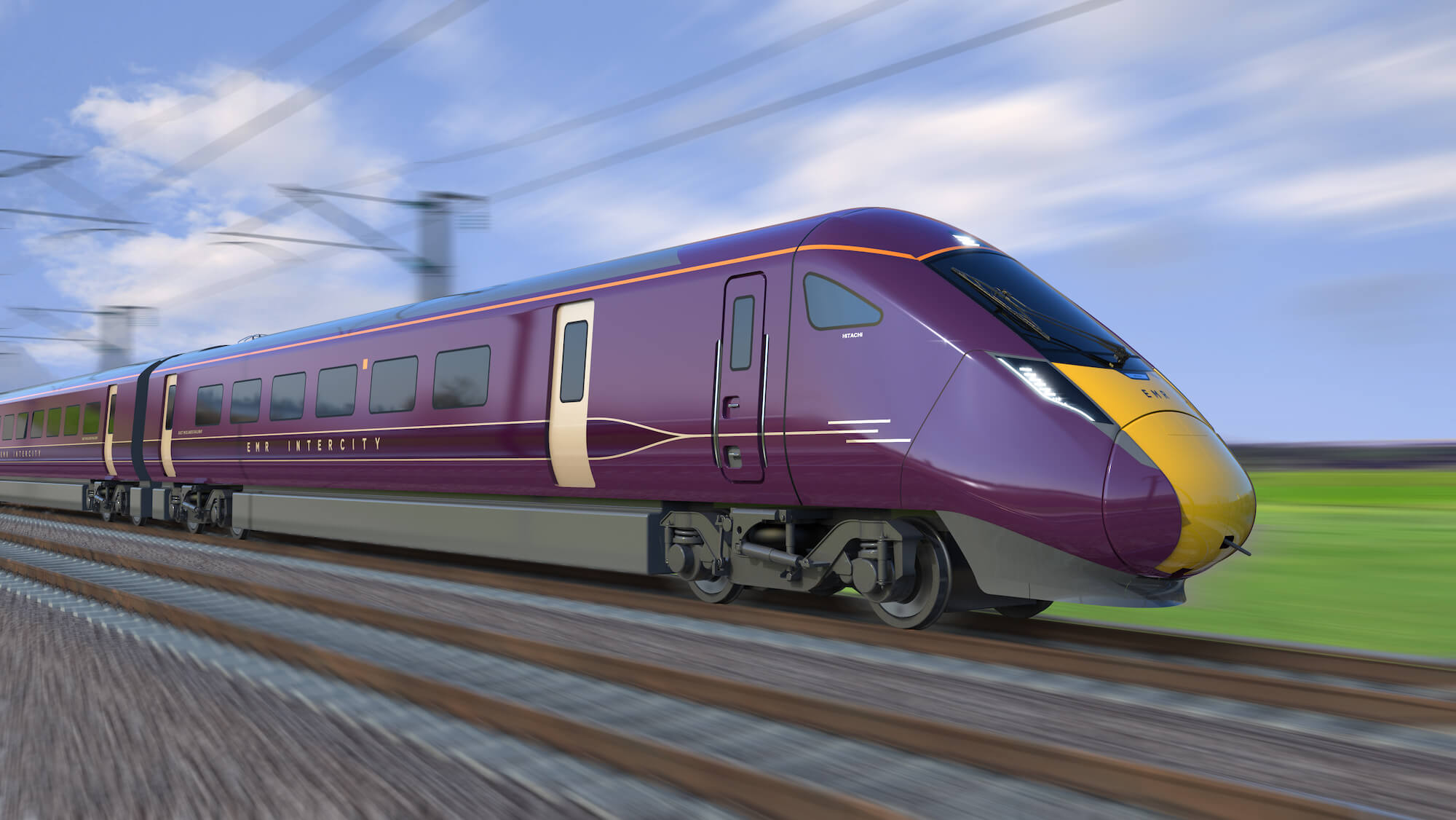
The class 745/1 trains will run on the Stansted Express route between London Liverpool Street and Stansted Airport and are designed to make passenger flow as easy as possible. Interior fittings are geared to customers about to take flights, with more space for luggage. On the outside, it is similar to the new class 745/0 Intercity.

The first class 755/3 three-carriage bi-mode train has also already been shipped to the UK, and more class 745/0 Intercitys will be dispatched from Switzerland over the coming weeks. Authorisation testing for the class 755/4 four-carriage bi-mode trains, which arrived at the end of last year, has now been successfully completed.

Martino Celeghini, technical project manager for Stadler, said: ‘Seeing the train pull into Liverpool Street for the first time made me realise how far we had all come since the contract was signed, less than three years ago. This route in particular is part of the life blood of the UK economy, and signifies Stadler’s entry into the mainstream UK rail industry.’

Ian McConnell from Greater Anglia, added: ‘Seeing the Stadler 12-carriage electric train pull into a platform at Liverpool Street was amazing. It really brought home what a huge improvement these brand new state-of-the-art trains will be for the railway in East Anglia. It’s unlike anything else in this country – and they’re going to transform our customers’ journeys.’

Mark Swindell, CEO Rock Rail, said: ‘These trains are an impressive sight and set to transform the travelling experiences for passengers on the Stansted Express route. They are some of the first trains to be introduced into the UK with finance provided through direct long term investment from pension funds and insurance companies.’

All of the new Swiss-made electric trains for Greater Anglia are longer, with more seats, plug and USB sockets and air conditioning. They will have fast free wifi and improved passenger information screens. Designed for comfort, the new Stadler trains feature low flooring to make them accessible for people in wheelchairs and with pushchairs. Windows are bigger and ‘picture style’ to improve the passenger experience and create a more airy and spacious feel. Customers will be able to walk more easily along the whole length of the train and all trains will be fully air-conditioned and have accessible toilets and bicycle spaces.
Recent articles

Rock Rail and Infracapital Partners Back New Battery-Electric Train...

Deal marks a long term investment in the country’s zero emissions transport infrastructure. Rock Rail, a leading developer...

Rock Rail purchases a brand-new fleet of Talent 3...

Rock Rail and abrdn Core Infrastructure have announced an investment in Alstom-built 31 x 6-car Talent 3...

Rock Rail ranked number one for Global ESG performance...

GRESB has named Rock Rail as the top ranked ESG (Environment, Social and Governance) Sector Leader in...

Driving Net Zero: How Rock Road 
Is Funding the UK’s Bus Transition

Accelerating the shift to clean, affordable, zero-emission transport

Year
2025
Category
Rock Road
Share

The Challenge

The UK bus network is at the heart of everyday travel – but over 30,000 diesel buses still need replacing to achieve a fully zero-emission fleet.

While around 5,000 battery-electric buses are already on the road, the high upfront cost of electric vehicles and depot electrification continues to slow the transition. Traditional funding routes — such as government grants or short-term bank finance – have helped start the journey but cannot support decarbonisation at the scale required.

A new, sustainable funding model was needed: one that could attract long-term capital, spread costs fairly, and give operators and authorities confidence in the future.

The Solution

In 2021, Rock launched Rock Road to deliver exactly that –  applying its proven infrastructure financing approach from the rail sector to the UK’s clean bus revolution.

Working with Aviva, the National Wealth Fund, and HSBC, Rock created a dedicated investment platform that channels infrastructure-style finance from pension funds and institutional investors directly into zero-emission bus projects.

This model provides:

Impact

The platform has already raised £100 million, with capacity to scale to £1 billion per year over the next decade – providing a consistent source of affordable capital for local authorities and operators.

Rock’s model ensures that the total cost of ownership (TCO) of electric buses can now be lower than diesel equivalents, thanks to both cheaper long-term finance and reduced operating costs.

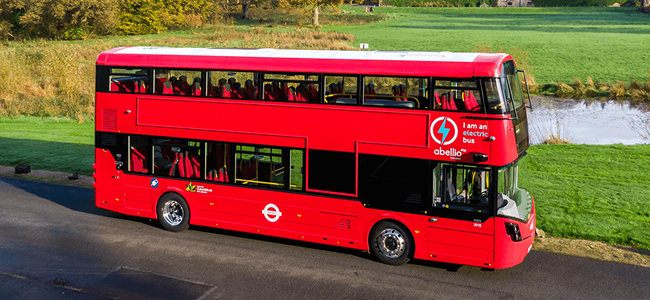
In London, Rock has financed 120 zero-emission buses under 7-year leases aligned with Transport for London’s contract lengths. This structure gives operators flexibility and certainty:

The Future

Rock Road’s ambition is to support the rollout of zero-emission fleets across the UK – helping local authorities and operators meet climate goals without overextending public budgets.

By leveraging limited government funding to attract large-scale private capital – for example, £10 million of public investment unlocking over £250 million in total funding – Rock’s model accelerates decarbonisation while keeping costs low for the public sector.

Our ambition is to make electric buses the default choice - not because of subsidy, but because they are the best economic and environmental option.
Louis Swindell
Commercial Director, Rock Road