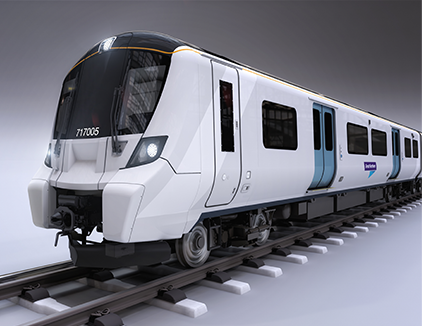
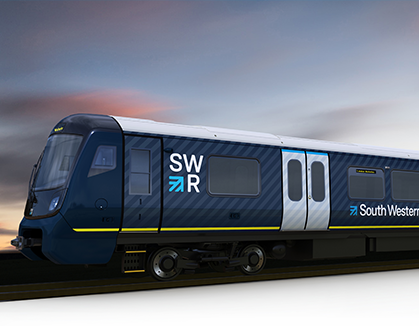
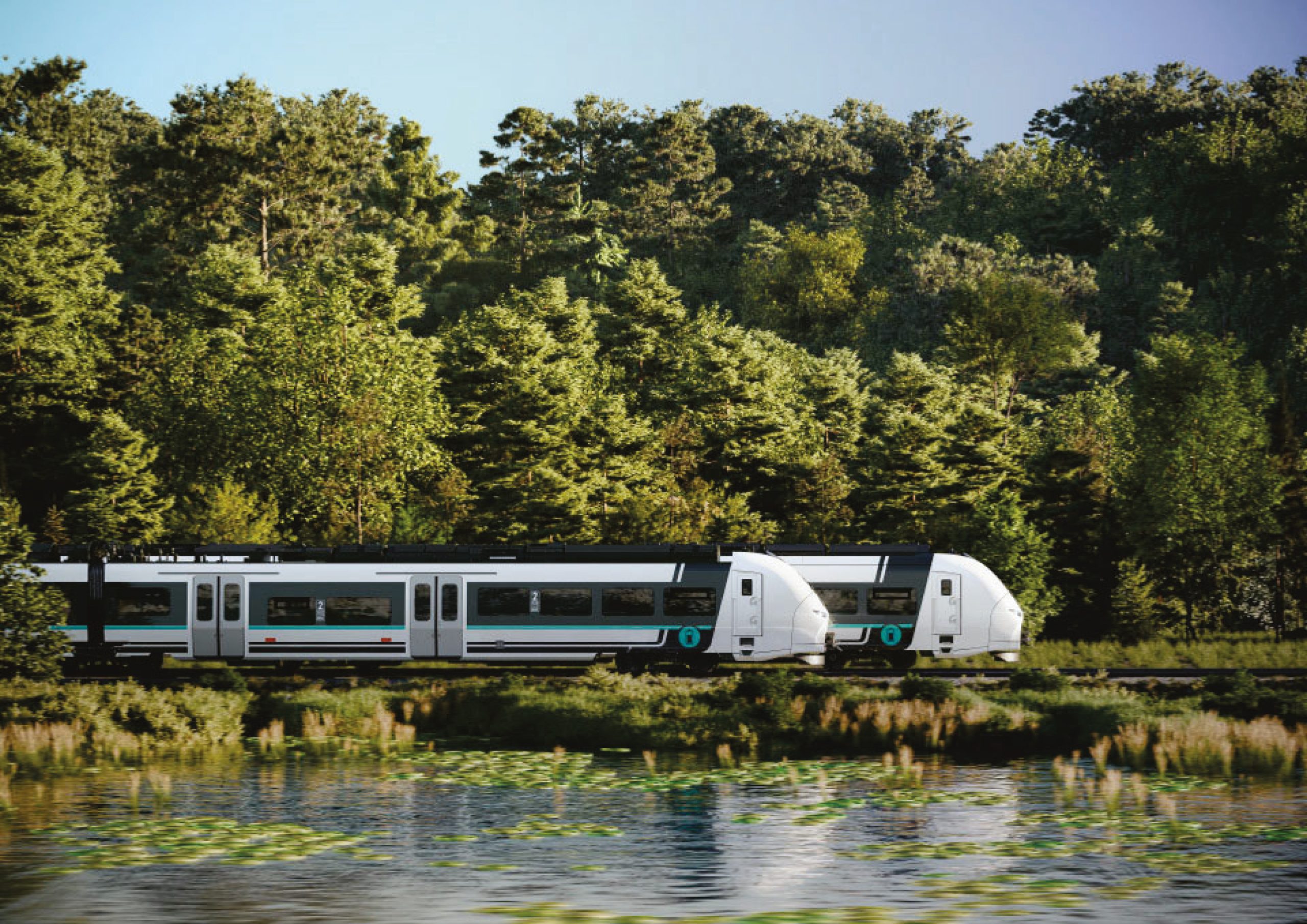


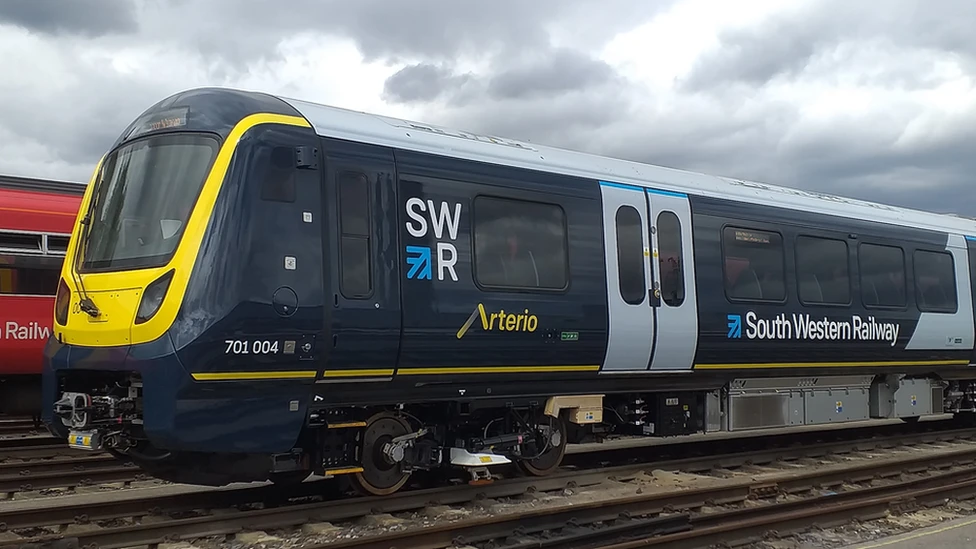
Unveiled by South Western Railway’s Managing Director Mark Hopwood during a special event at Wimbledon depot, the name Arterio reflects the suburban network’s importance to the nation’s capital.
The UK’s busiest station, London Waterloo is at the heart of the South Western network and South Western Railway’s suburban routes are the arteries which feed it, taking people to work and school, to the capital’s theatres, restaurants and bars and home again.
The 90-strong fleet will replace some of the network’s oldest trains, and will offer better reliability and performance, delivering more passengers where they want to go, on time and in comfort.
Customers travelling on Arterio will experience more comfortable and connected journeys with two by two seating, onboard Wi-Fi, at-seat charging points, screens showing real-time service information, air-conditioning, walk-through carriages, dedicated wheelchair spaces and fully accessible toilets across the entire suburban network for the first time.
The first Arterio train is expected to be introduced later this year on the Reading line, with a total of 750 new carriages to be introduced over the following two years.
Rock Rail South Western, a joint venture between Rock Rail, Aberdeen Standard Investments and GLIL Infrastructure, financed the fleet and will lease it to South Western Railway (SWR).
Rail Minister Chris Heaton-Harris said:
“This is an important milestone for South Western Railway. This new fleet which will offer improved reliability and better facilities, getting passengers across the South West to their destination in comfort and on time.
“As services begin to return to normal levels and passenger numbers increase, it is our upmost priority to ensure everyone stays safe when travelling, which is why we continue to advise people to wear a face covering, travel at quieter times, wash their hands regularly and maintain social distancing.”
Mark Hopwood, South Western Railway’s Managing Director, said:
“The name Arterio reflects how important this fleet will be in carrying people in and out of the heart of the capital.
“Although passenger numbers may be low at the moment, people will want to travel again whether that is for work or leisure and we will be ready to play our part in helping that recovery. New trains that offer a transformed travelling experience will be key to that.
“The Arterio fleet is a massive investment for our business, and we are looking forward to our passengers joining us on this exciting journey.”
Mark Swindell, CEO Rock Rail and Director Rock Rail South Western, said:
“We are delighted that the new and aptly named Arterio fleet is set to deliver a vastly improved travelling experience for passengers returning to these key SWR routes into and out of London.
“The new fleet represents the largest single investment by pension funds and insurance companies into UK rolling stock, reflecting Rock Rail’s and our institutional partners’ commitment to sustainable travel and, working in partnership with SWR and Bombardier, to helping transform rail travel across the region.”
Matt Byrne, President UK & Ireland, Bombardier Transportation said:
“We are delighted that South Western Railway have chosen the name ‘Arterio’ for the 750-car fleet we have designed and are now building here in Britain.
“We are working with SWR to bring the trains into service as rapidly as possible, so they can help transform the vital routes serving London’s Waterloo Station.”