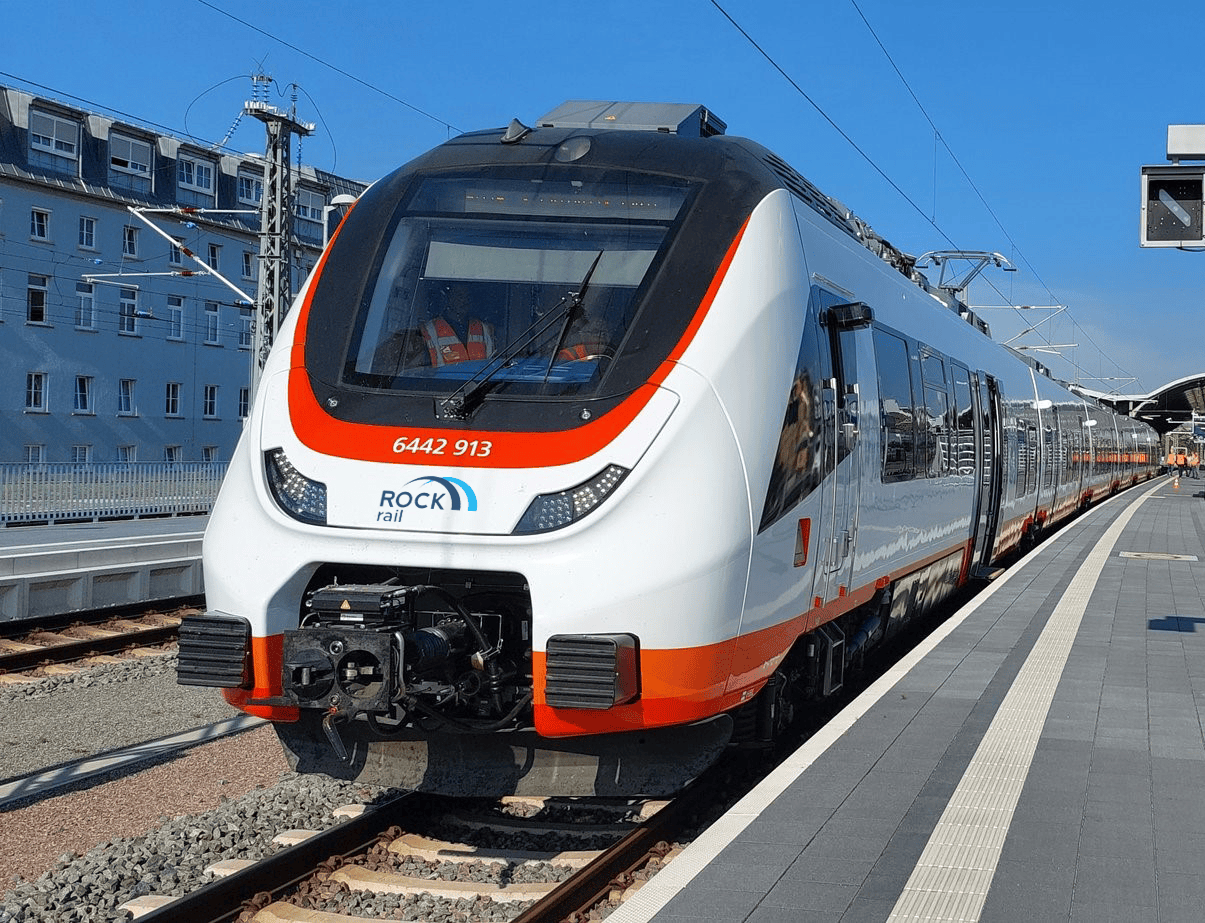
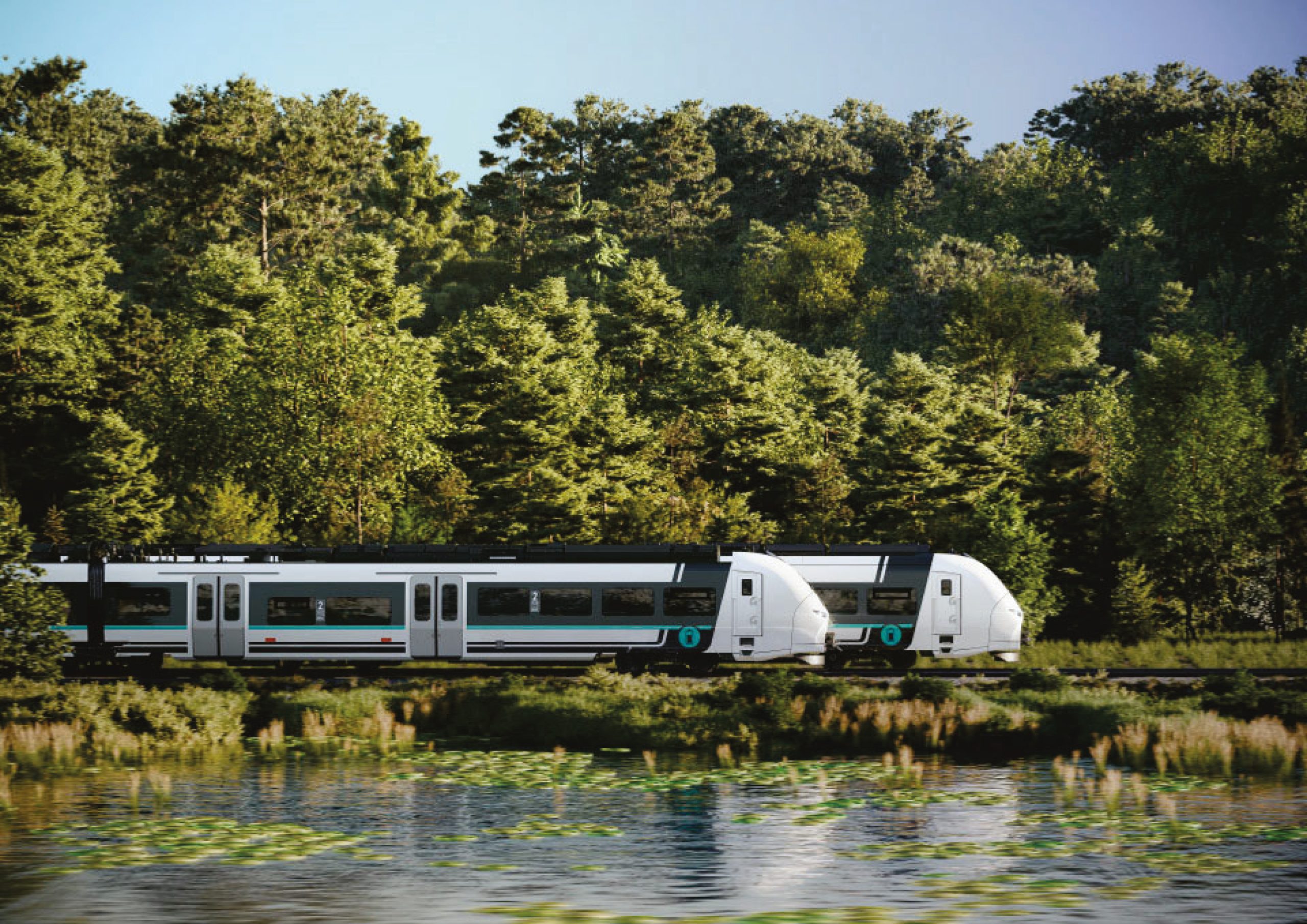


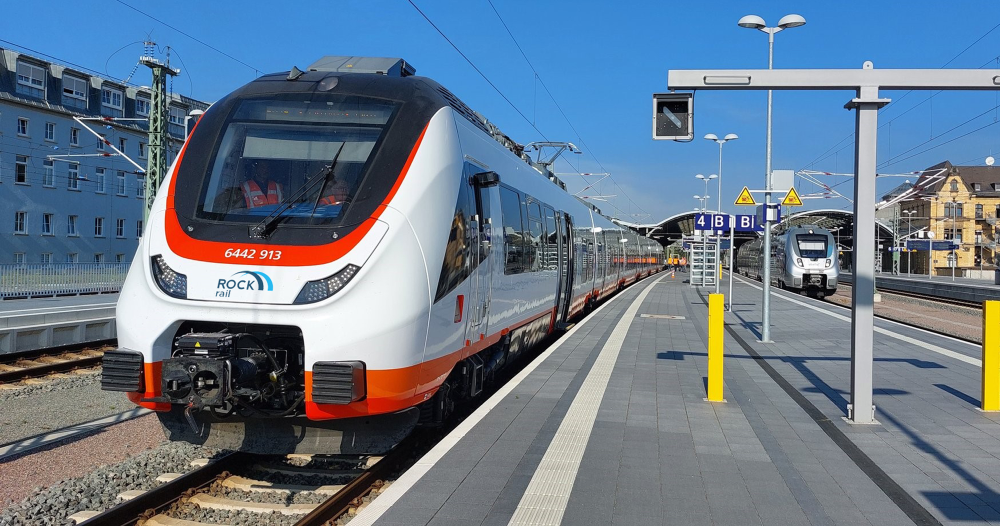
Rock Rail and abrdn Core Infrastructure have announced an investment in Alstom-built 31 x 6-car Talent 3 Plus electrical multiple units for the Baden-Württemberg and Saale-Thuringia-Southern Harz (STS) networks in Germany.
The Talent platform is a well-established and popular platform in Germany with a track record of delivering a high-quality passenger experience since the 1990s. The Talent 3 Plus is the latest evolution in the development of the Talent platform.
The Talent 3 Plus is fully electric and has a maximum speed of 160 km/h that enables fast train travel and is state-of-the-art for regional transportation. The trains will be fitted with European Train Control System (ETCS) Level 2 (more on that below), which increases safety and efficiency on the network.
The fleet has a sliding step and PRM functionality, including a PRM-accessible toilet and a built-in ramp lift to aid boarding. The fire safety category “B” allows operations in tunnels of any length. Rock Rail has received feedback that the trains are very well received by passengers on account of the interior design, which is built to the highest standard.
The State of Baden-Württemberg is the third-largest German federal state in terms of population and an economic powerhouse of Germany with Gross Regional Product equivalent to the GDP of Sweden. The state government is delivering numerous rail infrastructure projects that will support the region’s targets to reduce carbon emissions and double rail passenger demand. Stuttgart, the region’s largest city, is getting a new, underground main station to replace its old ground-level terminus – the €10bn+ project is flanked by the project Digitaler Knoten Stuttgart (DKS), which rolls out ETCS Level 2 in the whole Stuttgart rail node increasing the capacity of the existing infrastructure. The Talent 3 Plus are joining a complementary, anchor fleet of Talent 3 trains and their ETCS-capability will match the train to the infrastructure.
The STS network is operated by Abellio Rail Mitteldeutschland and has experienced huge growth in passenger numbers since the introduction of Deutschlandticket, a German-wide regional train ticket for 49 euro per month. The Talent 3 Plus units supplement a large fleet of Talent trains leased to Abellio and are delivering additional capacity to the RB 25 line between Halle and Saalfeld.
- ETCS
ETCS is state-of-the-art signalling technology – it is a standardised, transnational railway safety system that is already used in many European countries. It works by sending radio transmitted signals directly to the drivers’ cab rather than relying on light signals installed trackside. The system improves train control by allowing trains to run at shorter intervals and increases safety by automatically braking trains if they are travelling too fast or too close together.
Alstom is a global leader in the modernisation of railway systems and has developed an ETCS Level 2 system that is helping to increase rail transport capacity on existing lines, reduce maintenance costs and all while maximising safety. Alstom is installing the ETCS Level 2 equipment on board of the 31 Talent 3 Plus trains.
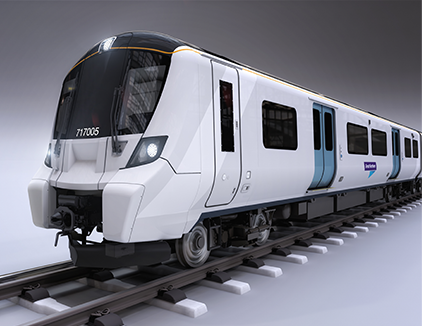
And ETCS is coming to the UK. In November 2023, Rock Rail’s Class 717 EMUs operating under ETCS Level 2 signalling carried Great Northern commuters to the City of London. Siemens Mobility supplied the signalling equipment for the first of its kind project, which is a vital pathfinder for the digital signalling masterplan across the UK network.
Henry Swindell, Investment Director, Rock Rail, added: “We are pleased to announce Rock Rail’s fourth major rolling stock acquisition in Germany. The transaction is proof of the continued recovery in the transport sector, which has seen disruption and change aplenty in recent years. The trains are already making a difference, delivering flexibility to service operations and a step change in the passenger experience.”
Nick Flynn, Investment Director, abrdn, said: “This represents the sixth major investment in rolling stock for the abrdn Core Infrastructure team solidifiying abrdn’s position as a major owner of rolling stock. We are committed to delivering safe and reliable essential infrastructure to local communities and we appreciate all the parties’ involvements and efforts in successfully reaching financial close.”
Christoph Klaes, Vice President Customer Management at Alstom, said: “We are delighted that Rock Rail and abrdn have opted for the Talent 3 Plus. The trains provide a state-of-the-art passenger experience, a high level of comfort and ample capacity for the growing demand for sustainable transport in Baden-Württemberg. Thanks to Alstom’s ETCS solution, the fleet will be well-equipped for the ongoing digitalisation of rail traffic.”
Stifel acted as exclusive M&A and Debt advisor on the transaction. The debt package comprises an institutional tranche provided by Aviva, MetLife and Legal & General, and a bank loan provided by Barclays and SEB.