







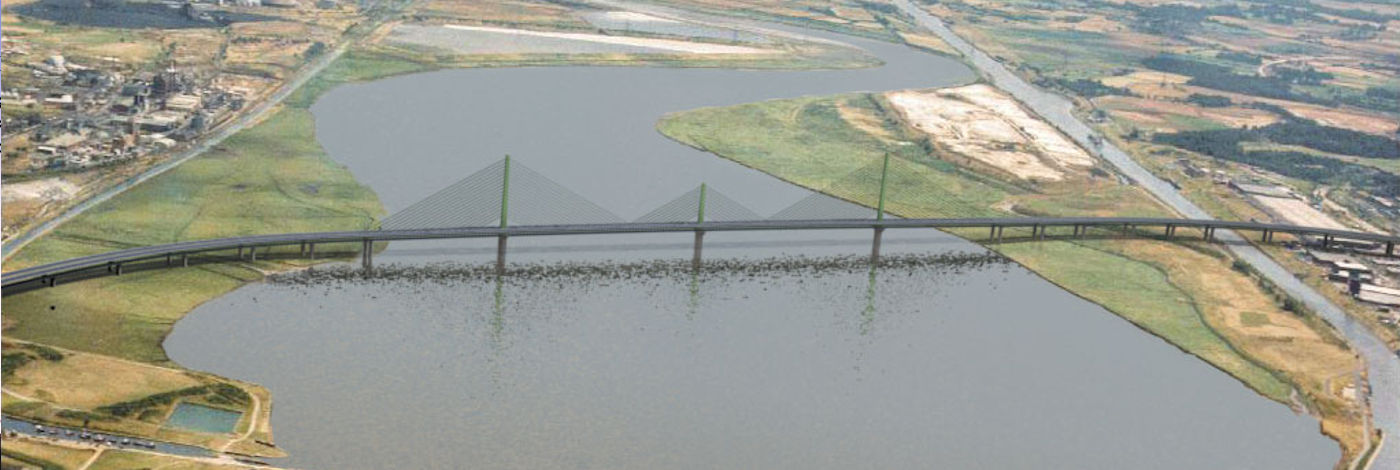
The new dual three-lane bridge and associated link roads will form a major new transport route improving links between the Liverpool City region, north Cheshire and the wider North West to the rest of the country. It will also ease the significant congestion currently experienced by users of the Silver Jubilee Bridge, reducing journey times by up to 10 minutes at peak times.
Construction of the new bridge – known as the Mersey Gateway Bridge – is expected to begin in 2013 and is due to be open for traffic in 2016. The construction cost (including land) is around £600m which the Department for Transport will support with a mixture of capital grant and continued revenue funding for PFI payments.
The existing Silver Jubilee Bridge, located 1.5 miles to the west of the planned bridge, will be converted into a local traffic bridge with priority for buses and improved conditions for pedestrians and cyclists. There will be toll charges for those using both crossings to help fund a significant proportion of the scheme. The funding provides for discount schemes, which would be prioritised for local and regular users.
Transport Secretary Philip Hammond said:
“The Mersey Gateway Bridge is an important transport project which will improve journeys and boost economic growth. It will not only provide much needed traffic relief for the existing Silver Jubilee Bridge, but also help to regenerate the Borough of Halton, the Liverpool city region and the wider north west by improving transport links, maximising local development and regional economic growth opportunities.
“In response to the Government’s request to reduce costs, Halton Borough Council have achieved savings of around £30m on the original proposed cost – meaning the scheme will offer better value to the taxpayer, whilst bringing vital improvements to the region. Further cost savings are expected through a competitive procurement process.
“I was determined to ensure that the agreed funding package represented a robust and sustainable funding model for the bridge that protected both the taxpayers and the residents of Halton. This is a good result.
“We have already committed to support local transport schemes across England to the value of £870m in the current spending review period, with a further £650m worth of schemes expected to be funded in December. This means we will have invested £1.5bn on improving local transport across the country in the current spending review period.”
The benefits of the new bridge include:
- Relieving congestion on the Silver Jubilee Bridge and improving public transport links across the River Mersey between the two parts of Halton
- Improving accessibility in the region
- Improving local air quality and enhancing the urban environment
- Encouraging increased use of cycling and walking
Steve Nicholson, Director, Mersey Gateway Project, said:
“We have been working very closely with Government over recent months to finalise the details of this agreement and I am delighted with the results. This agreement represents the best possible deal for the public purse and means that we can focus on delivering a project that will bring benefits to local people, commuters and businesses from across the region.”
Mark Swindell of Rock Infrastructure will become Commercial Director of the Mersey Gateway Project.