

The transformation of the railway in East Anglia is being celebrated with an official launch of Greater Anglia’s brand-new trains.
The event, hosted by Greater Anglia, Swiss train manufacturer Stadler and train leasing company Rock Rail East Anglia, sees VIP guests from the local community and businesses taking a journey on one of the new trains.
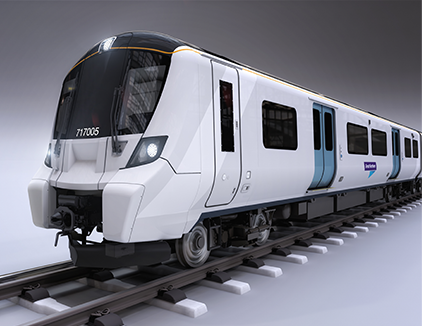
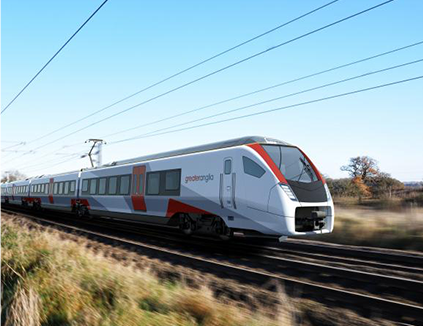
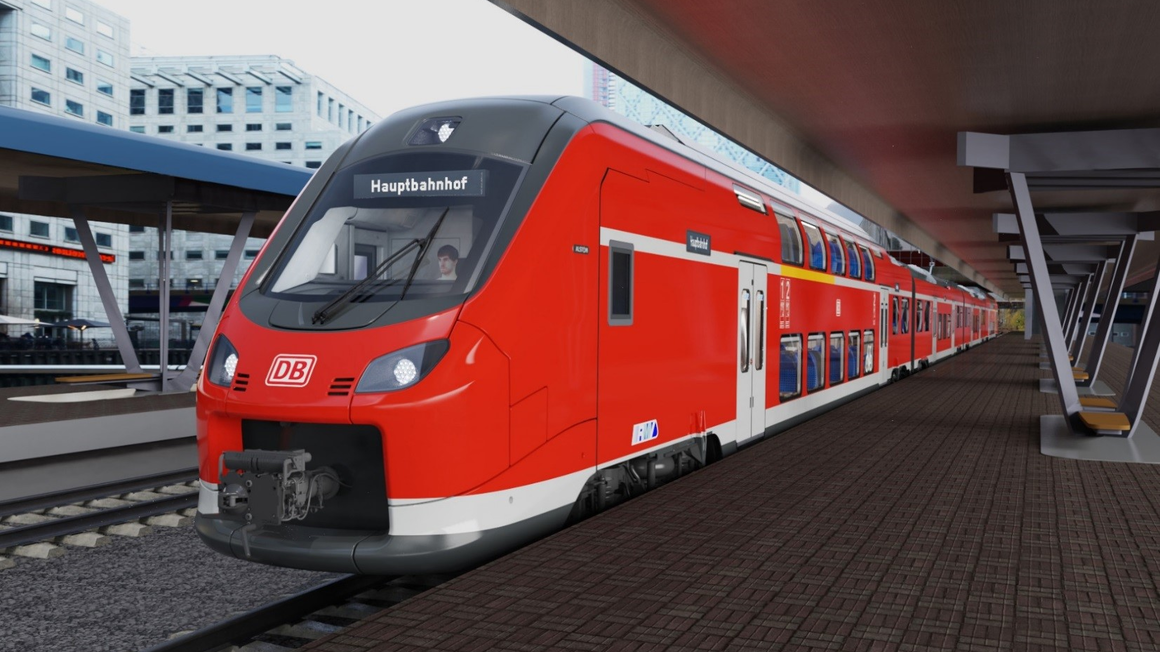
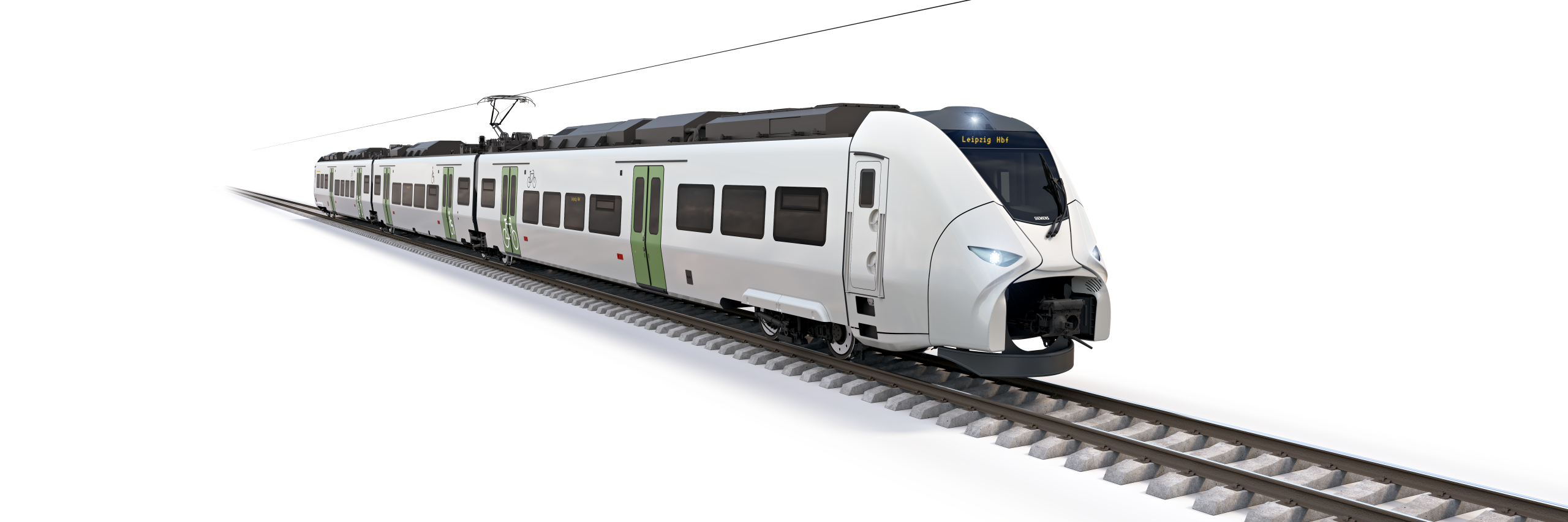
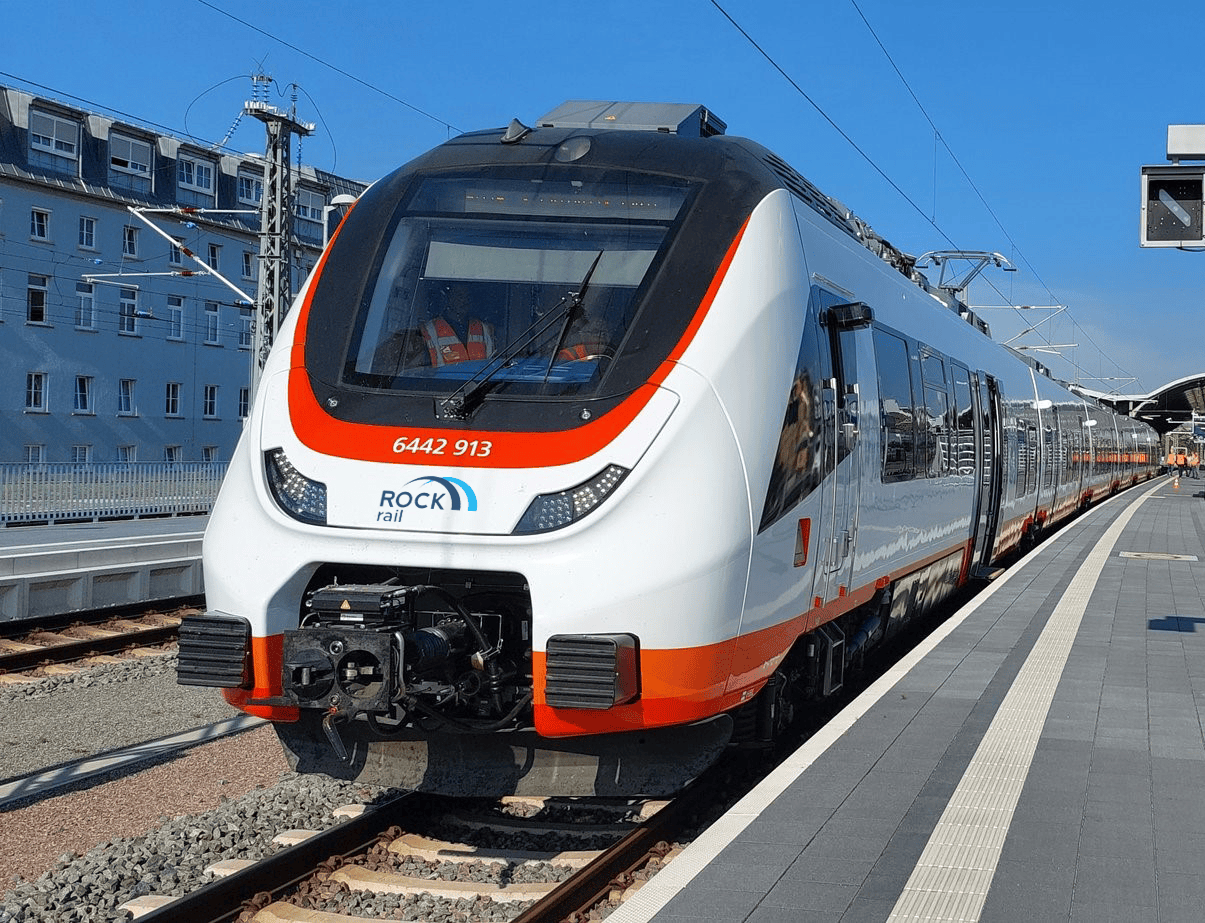
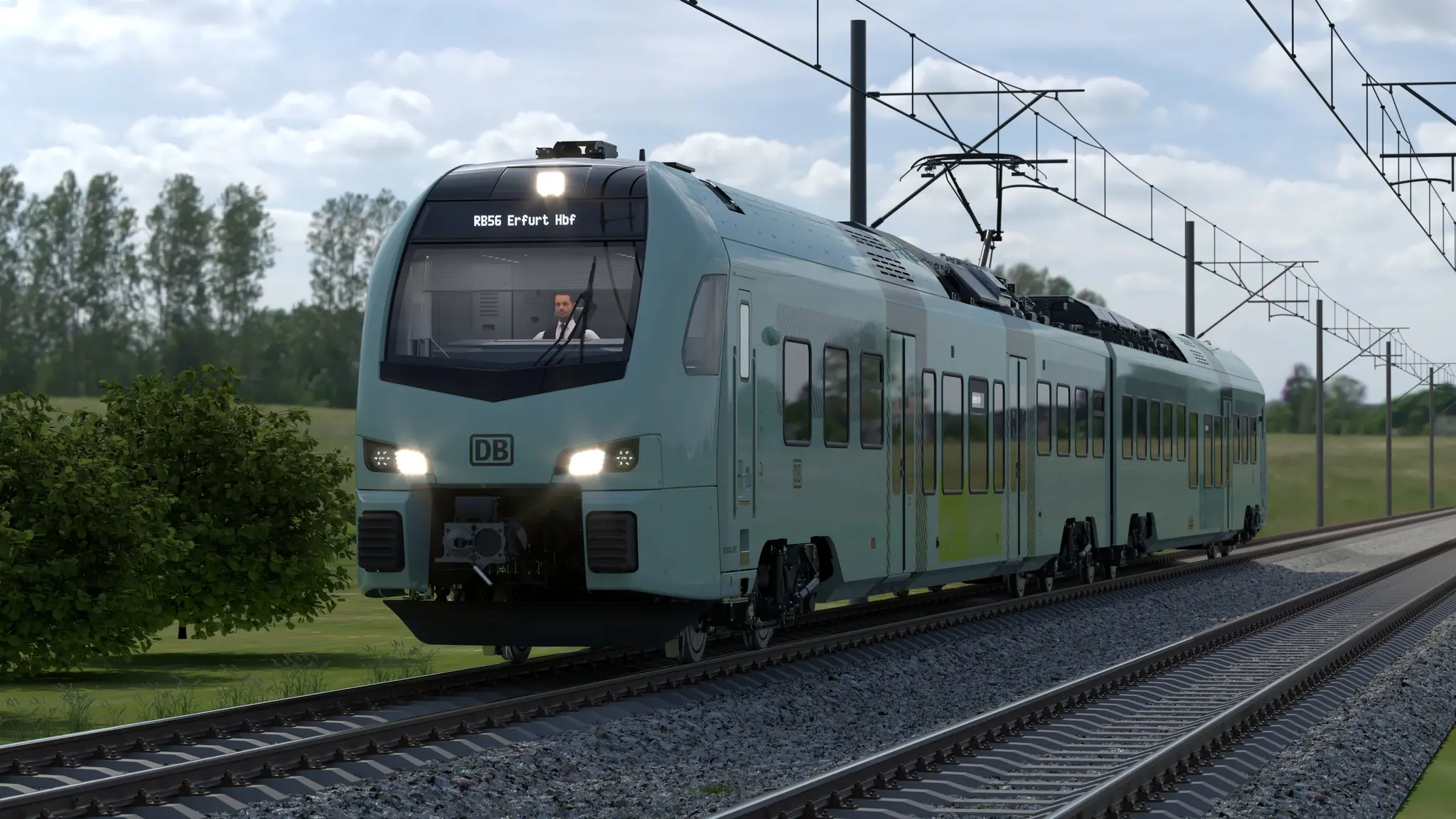
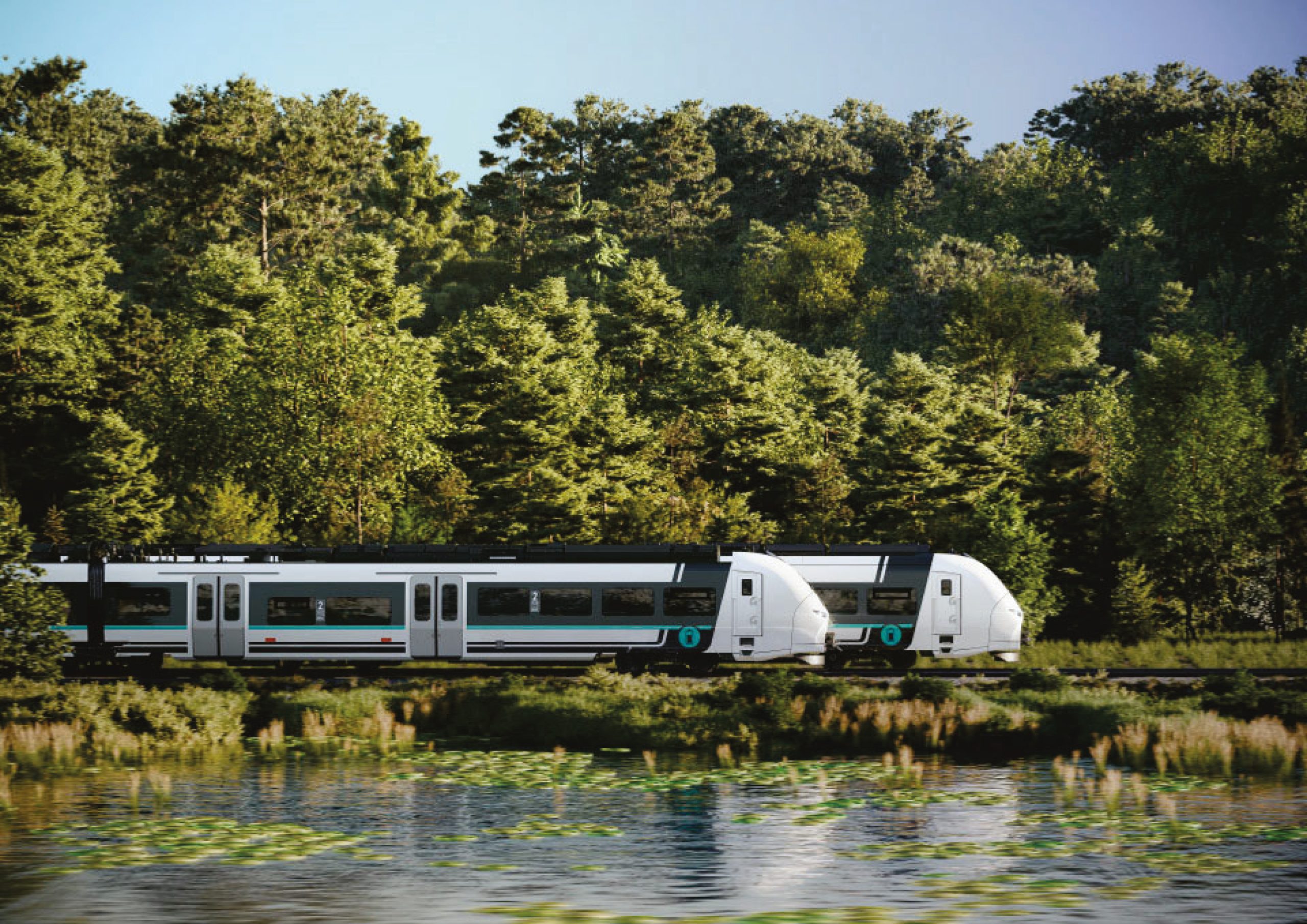
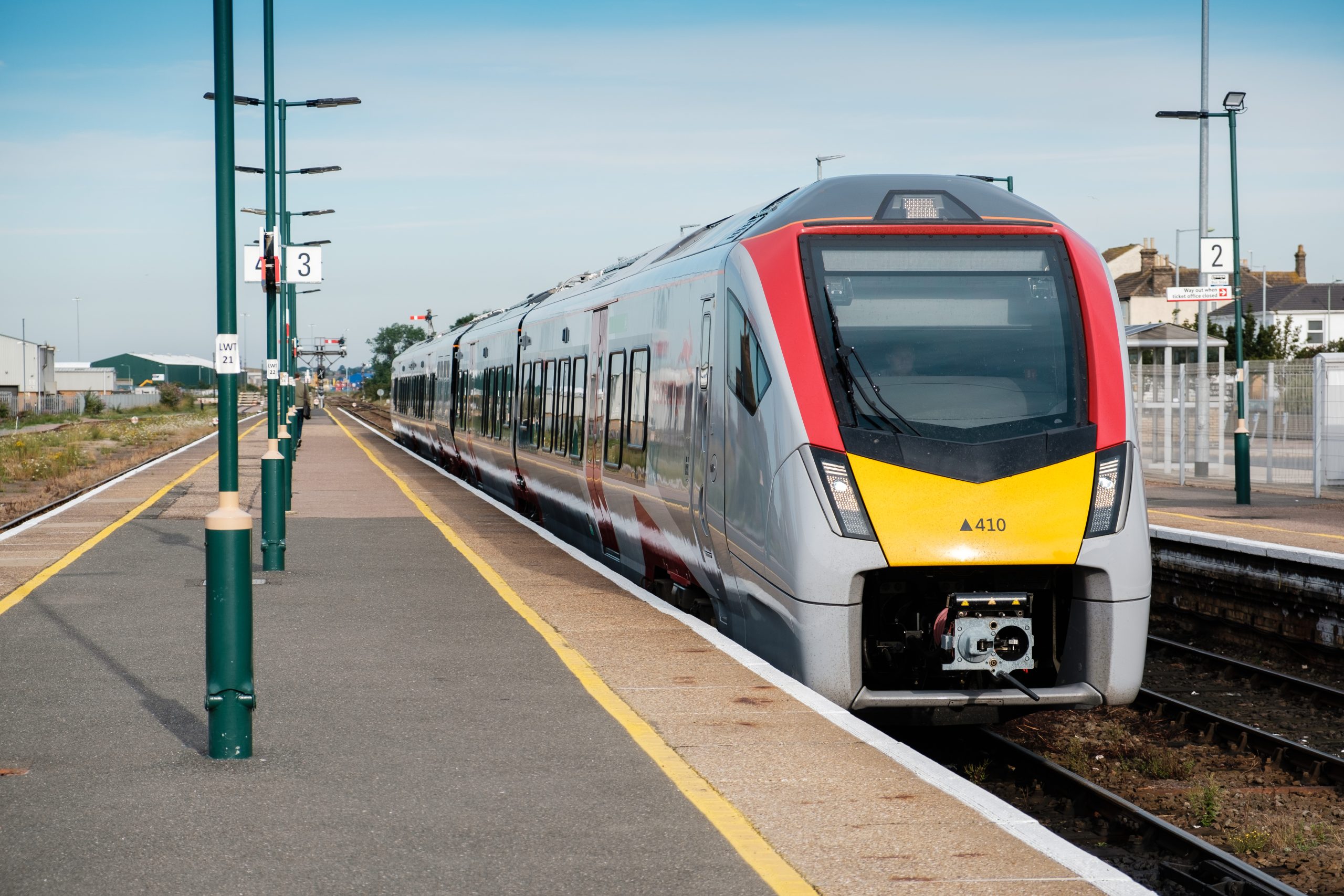
Modern longer state-of-the-art bi-mode trains are now in service on the Greater Anglia network, just three years after the contract was signed to buy 58 trains from Stadler. The bi-mode trains, powered by diesel and electricity, are replacing all of Greater Anglia’s existing diesel trains on rural routes.
They are some of the first trains in the UK to be financed with long-term investment from pension funds and insurance companies through Rock Rail East Anglia, a joint venture between Rock Rail, Aberdeen Standard Investments and GLIL Infrastructure.
Left to right: Mark Swindell CEO Rock Rail, Thomas Ahlburg Group CE Stadler and Jamie Burles MD Greater Anglia. Photograph: Nick Strugnell
Jamie Burles, Greater Anglia managing director said: “Our customers are telling us they think our new trains are amazing. We promised new trains would improve their journeys and that’s exactly what they’re doing.
“Feedback has been brilliant. Customers love the USB and plug points, the improved accessibility, the longer trains with more seats, the smooth, quiet ride and the comfortable seats.
“We’ve now got new trains in service on the Norwich-Great Yarmouth-Lowestoft and Norwich-Cambridge routes and we’re looking forward to rolling them out across the rest of the network.”
Thomas Ahlburg, group chief executive of Stadler, commented: “Our new trains combine outstanding passenger comfort with leading edge technology. After months of hard work, we are delighted that they are being introduced into service.
“Stadler has a reputation for designing and producing excellent products, tailored to the needs of customers. The successful roll-out of these trains is testament to this, consolidating our position as a key player in the UK market. The coming months will see the electric trains open their doors to passengers. I am confident that they will enjoy as many plaudits as the bi-modes.”
Mark Swindell, chief executive officer Rock Rail and director Rock Rail East Anglia said: “Rock Rail and our investment partners are delighted to see these state-of-the art trains enter service and receive such positive feedback from rail passengers.
“The long term, highly competitive funding from our pension fund and insurance company partners and from the European Investment Bank enables significantly enhanced value for money to passengers over the life of the trains along with significant improvements in the travel experiences for the people of East Anglia.
“We look forward to continuing to work closely with Greater Anglia and Stadler as the rest of the fleet enters service and marks a new era of rail travel across the region.”
Rail Minister, Chris Heaton-Harris said: “These brand new trains will bring real, tangible benefits for passengers across East Anglia, including better accessibility and improved Wi-Fi.
“Our priority is delivering a truly passenger-focused railway that sees our trains running on time. This investment will help deliver that, with greener, cleaner journeys and a more comfortable and reliable service for passengers.”
Greater Anglia is getting 38 bi-mode trains, 24 x four-carriage trains and 14 x three-carriage trains, which will run between Norwich and Great Yarmouth, Lowestoft, Cambridge and Sheringham; Ipswich and Cambridge, Felixstowe, Lowestoft, and Peterborough; and Marks Tey and Sudbury.
In addition, the company is also getting 20 electric trains from Stadler, ten for the intercity route between Norwich and London Liverpool Street and ten for the Stansted Express service between London Liverpool Street and Stansted Airport.
Each train is longer with more seats, air conditioning, plug and USB points, six cycle spaces and improved passenger information screens.
The trains have lower floors, with sliding steps at every door which bridge the gap between the train and the platform, making it easier to get on and off the train with wheelchairs and pushchairs.
They will be maintained at Norwich Crown Point depot, which is benefitting from a £40 million upgrade to prepare it as a base for all the new Stadler trains.
Greater Anglia is replacing all of its existing trains with 169 brand new trains in total – the most ambitious wholescale fleet replacement in UK rail franchising history.
The celebration includes entertainment from a specially commissioned animatronic giant red hare – Greater Anglia’s new brand character, and a steel band.
Photography: Nick Strugnell
After speeches at Norwich station, VIP guests travel on one of the new trains to Great Yarmouth, where they will be joined by local guests who will be able to view a sand sculpture of a bi-mode train.
In the afternoon the special train goes to Lowestoft, to celebrate the launch into passenger service on the Lowestoft line, where there will be more speeches and a performance by the giant hare.
Photography: Nick Strugnell