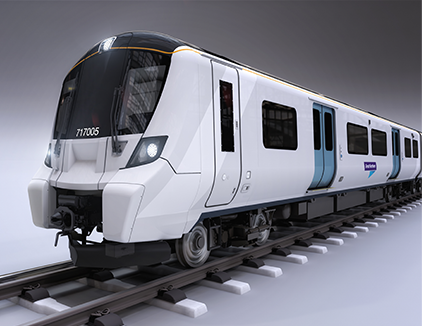
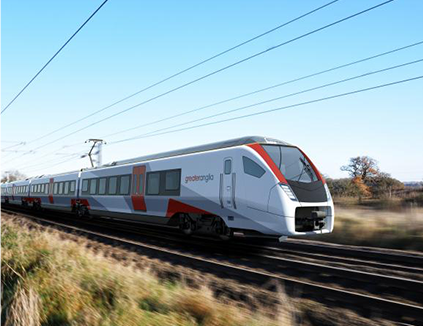
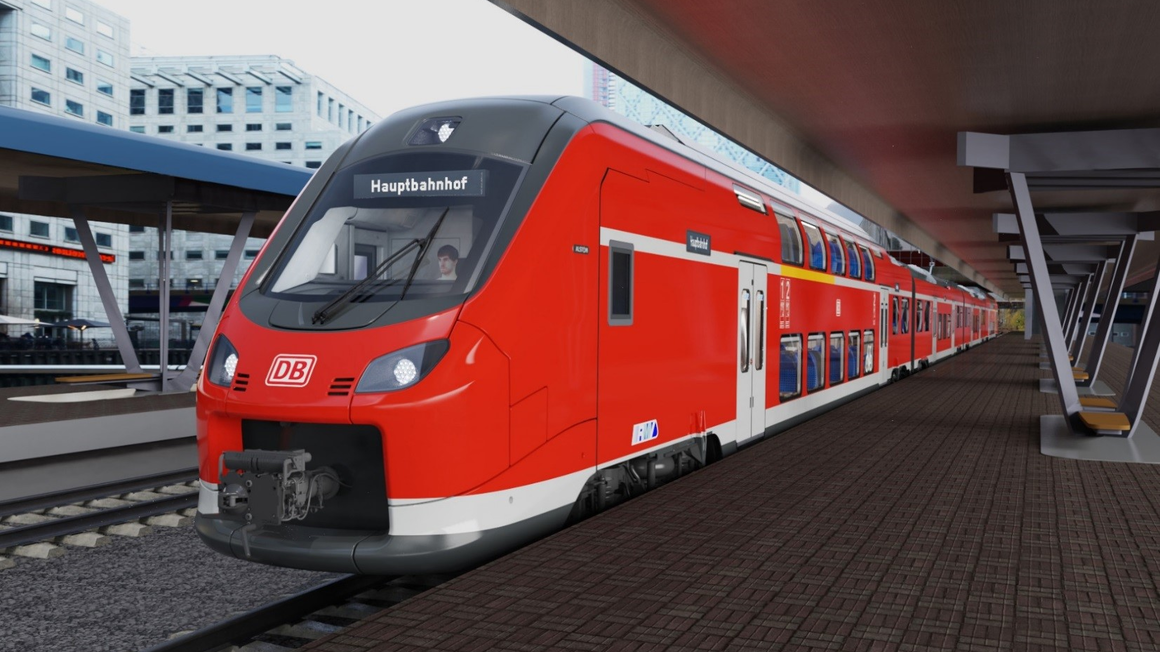
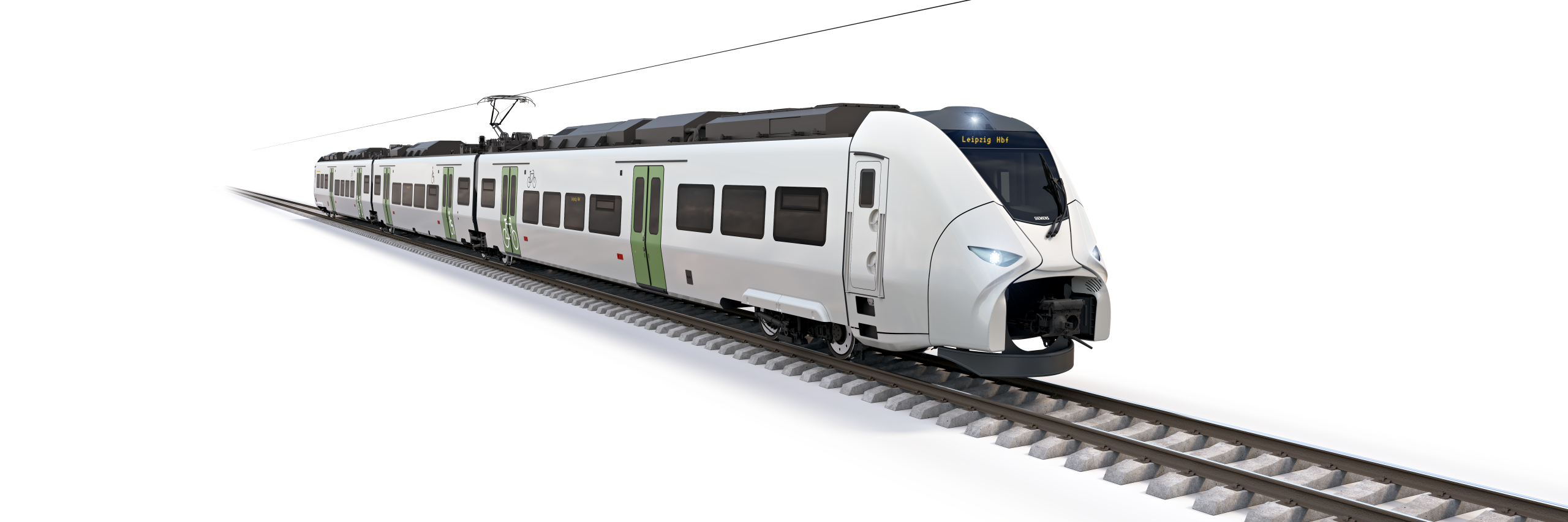
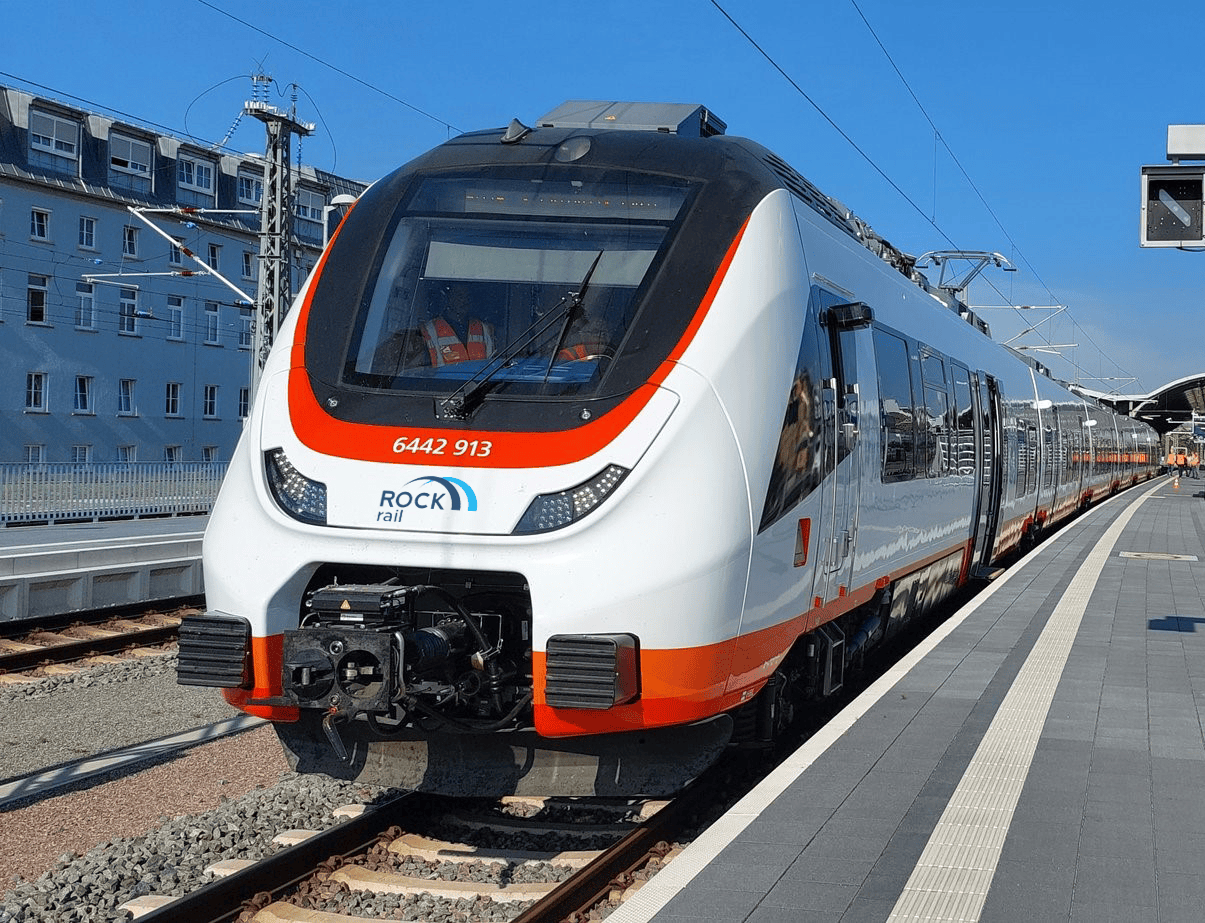
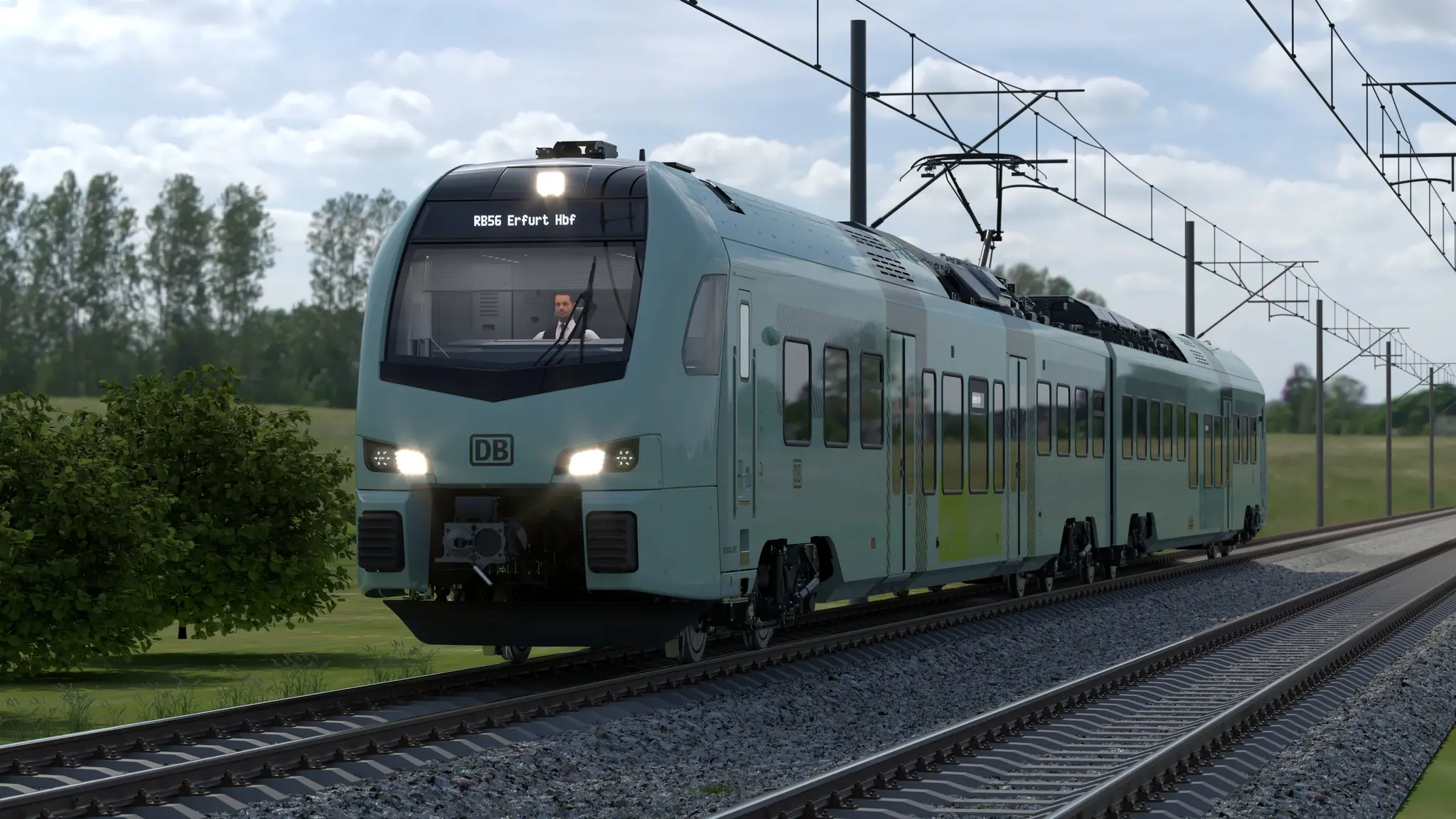


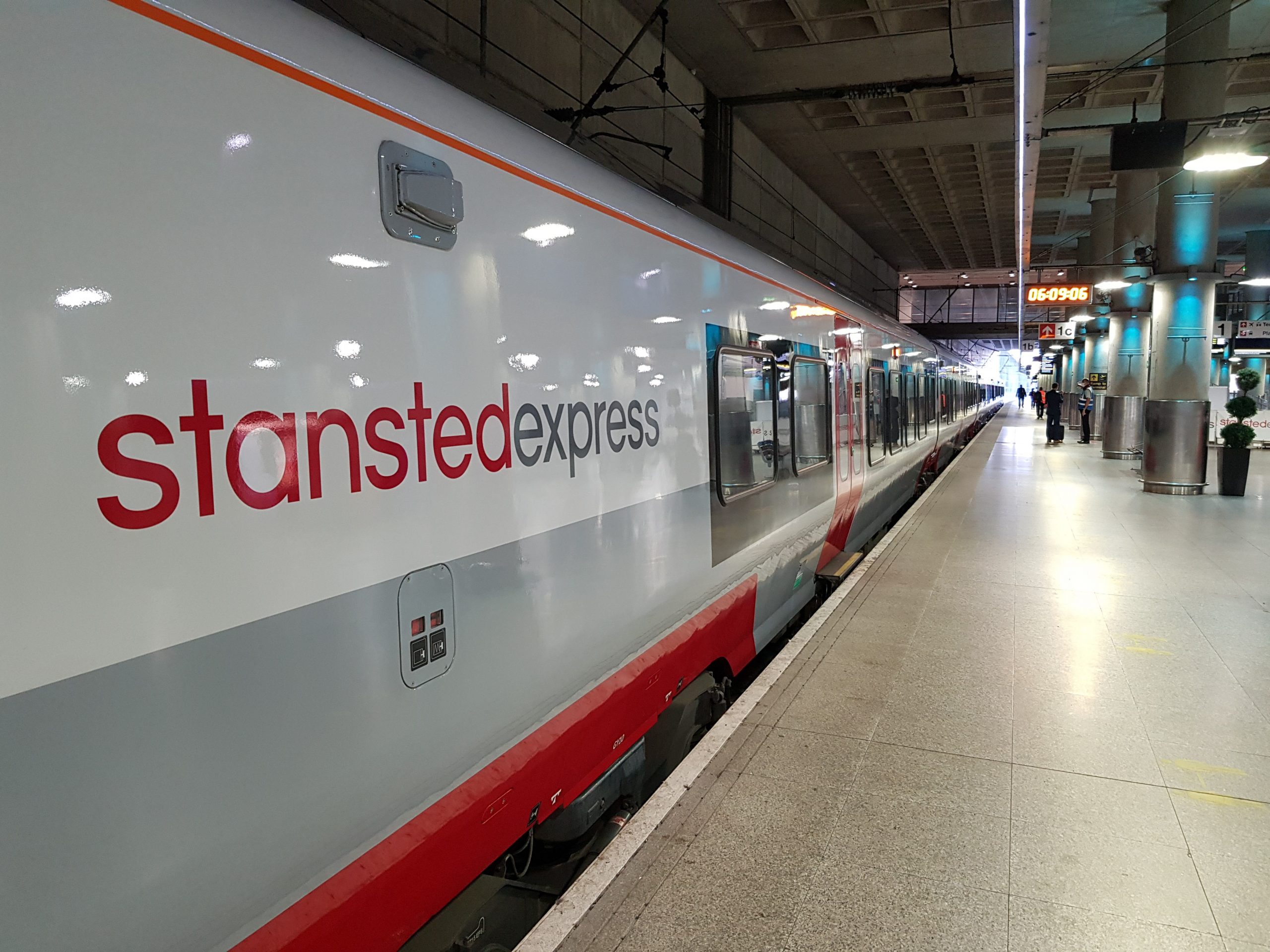
The first of the new 12-carriage electric trains, built by Swiss company Stadler, left London Liverpool Street for the airport at 05.06 this morning (Tuesday 28 July).
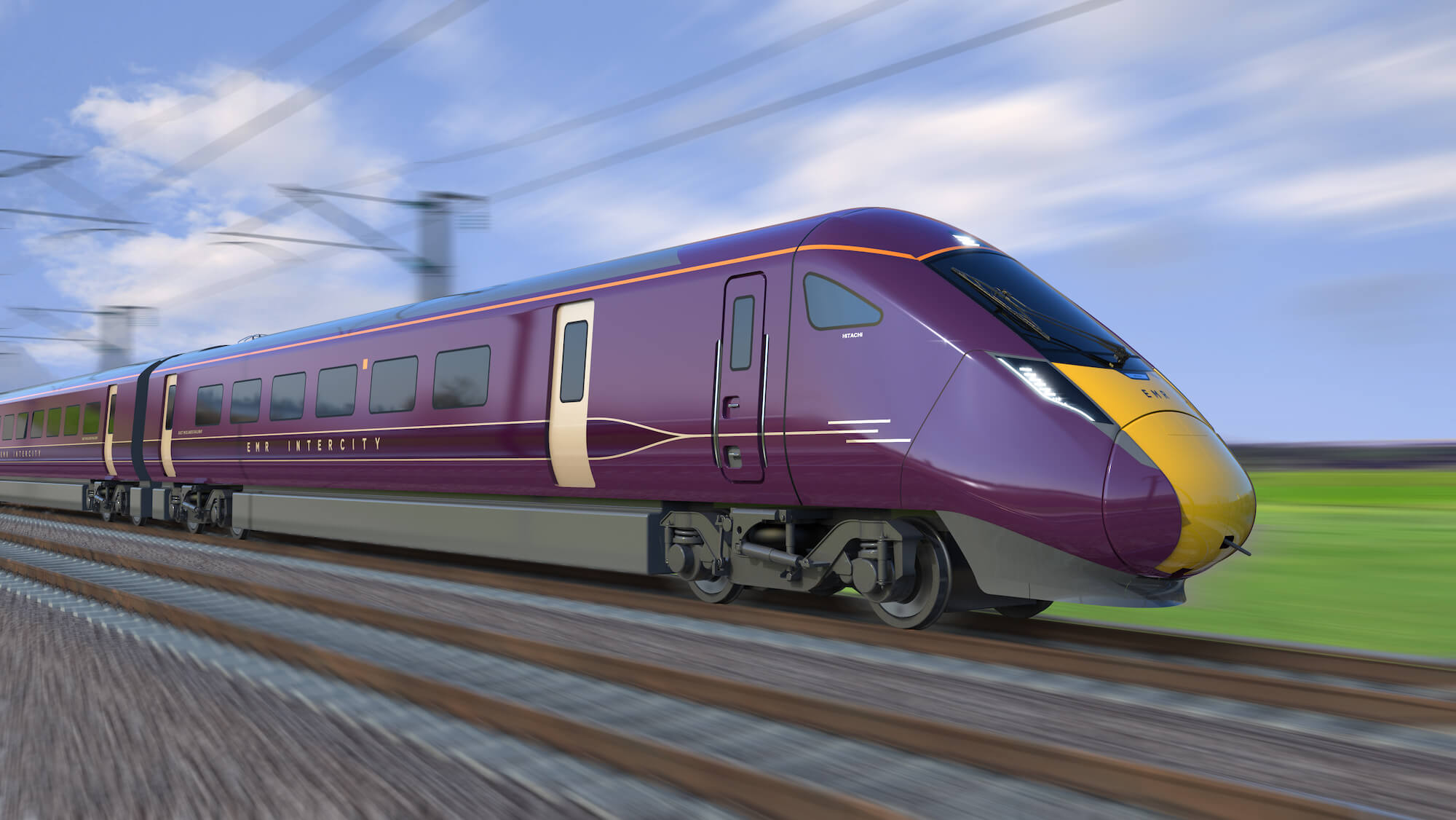
The Stansted Express trains are part of a £600 million investment in new trains for the region which are financed by Rock Rail East Anglia, a joint venture between Rock Rail, Aberdeen Standard Investments and GLIL Infrastructure, and are being leased to Greater Anglia. As well as 10 new Stansted Express trains, the investment includes a further 10 electric intercity trains for service between Norwich and London and 38 bi-mode regional trains.
Mark Swindell, CEO Rock Rail and Director Rock Rail East Anglia, said: “We are delighted to see the first of the new Stansted Express trains enter service and delivering stepped improvements in travel experiences for passengers on the Liverpool Street to Stansted Airport route.
“The new, state-of-the-art trains for Greater Anglia are financed through pension funds and insurance companies. This long term, highly competitive funding enables significantly better value for money to rail passengers and taxpayers over the life of the trains, along with significant improvements in passenger, environmental and operational features.”
All the bi-mode regional trains and 12-carriage electric intercity trains are already in passenger service. Over the next six to nine months Greater Anglia will replace all the current trains on the Stansted Express services with new trains, as part of its phased programme for bringing the new trains into service, transforming rail travel across the region.
Ian McConnell, Greater Anglia franchise and programmes director, said: “We’re very pleased to have started the roll out of our new Stansted Express trains into passenger service.
“They provide significant benefits for both airport travellers and other customers travelling to or from London from stations such as Bishops Stortford and Harlow Town.
“This milestone marks the start of the final phase of the programme to introduce the new trains being built for us by Stadler.”
The new, longer Stansted Express trains have 767 seats – an increase of 83% on the 418 seats available on the 8-carriage trains currently operating the services.
They also have plug and USB sockets, free fast Wi-Fi, air conditioning and improved passenger information screens.
As with Rock Rail East Anglia’s new bi-mode and intercity trains for Greater Anglia, they have gold standard accessibility features including a lower floor and a retractable step at every door to bridge the gap between the train and platform.
In every way, they offer a high-quality travel experience for travellers between Stansted Airport and London Liverpool Street.
Steve Griffiths, Managing Director for London Stansted Airport, said: “The start of the introduction of brand new Stansted Express trains is fantastic news for all users of the service, including airport passengers, staff and local commuters as they travel between the airport and London, significantly enhancing the onboard journey experience and providing a real boost to our proud record as the UK’s number one airport for public transport use by passengers.”
Leandro Haggenmacher, technical project manager for Stadler, said: “The start of the roll-out of trains for the Stansted Express route is a significant landmark, as we enter the final stages of the project to supply 58 new trains for the Greater Anglia network. We are very pleased to have reached this point, recognising the important role Stansted Airport plays in the regional economy, boosting economic growth and supporting jobs.”